


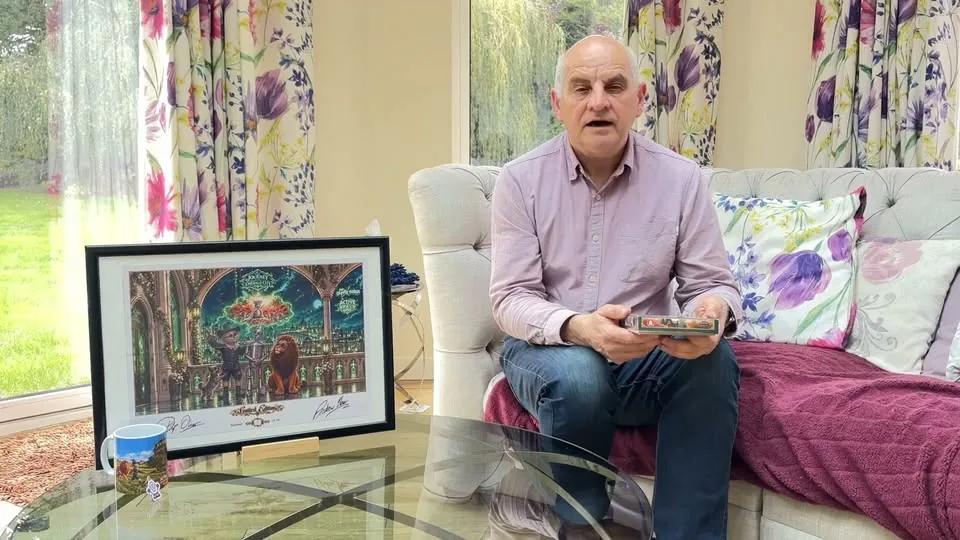
Inside Journey to the Emerald City with Philip Oliver
Watch Philip explain how a storybook, cards and physical puzzles bring the feeling of an adventure game away from the screen.
Computers, graph paper, home-made tools and the people behind the adventures.
In their interview with Chris Wilkins for the Fusion Retro 2020 Annual, the Twins describe developing Dizzy on Amstrad computers with Maxam ROM assemblers. A home-made connection let them send compiled code to a Spectrum, making development across the two machines more efficient.
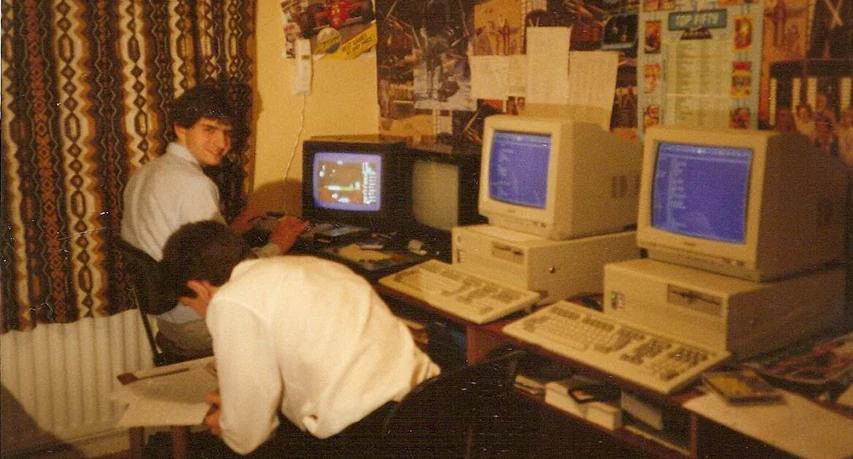
The bedroom development setup: computers, monitors and work in progress.
Credit: Oliver Twins archive
Source: The Oliver Twins archive
Usage: Photographer and reuse terms are not specified in the source.
The same interview recalls planning the game’s map and objects, and reusing parts of the Ghost Hunters code. Technical economy and puzzle design worked together: a small computer could still hold an adventure with places to explore and problems to solve.
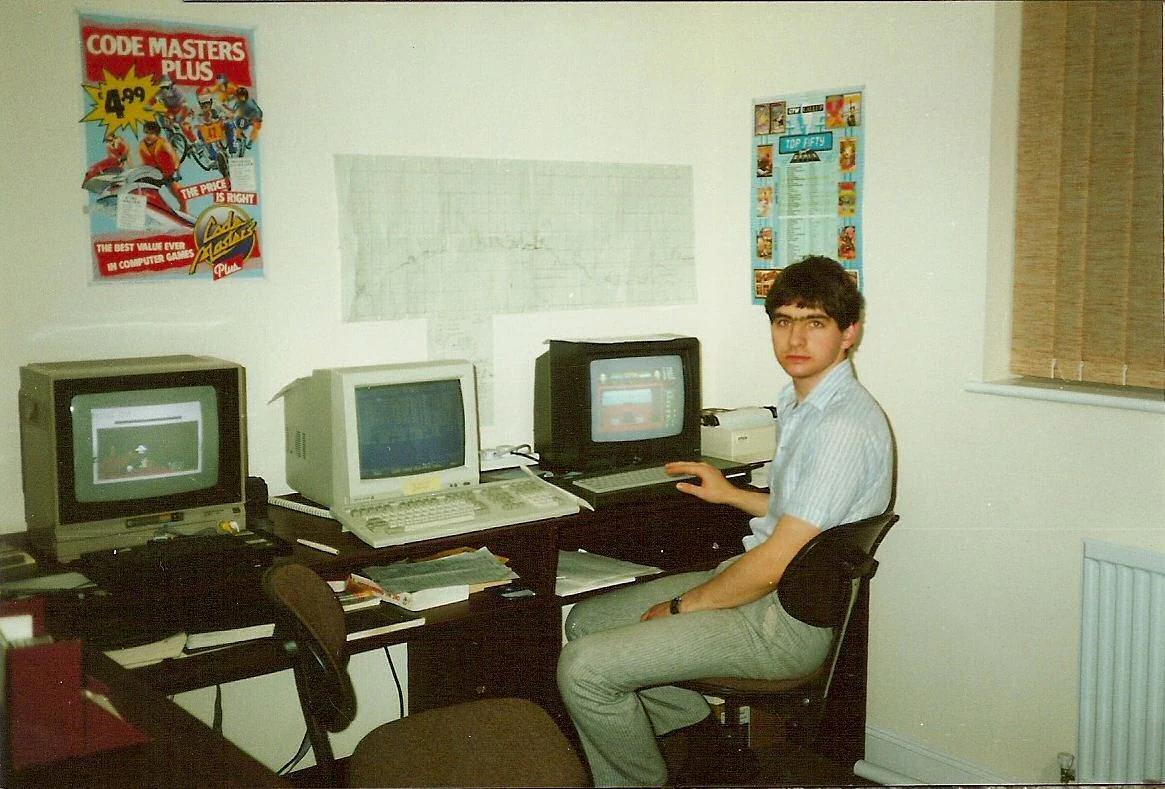
Andrew at work in Shrewton Close, 1989, as identified in the official archive.
Credit: Oliver Twins archive
Source: The Oliver Twins archive
Usage: Photographer and reuse terms are not specified in the source.
Join Andrew & Philip for news, clues and the next big update!
By signing up, you’ll receive occasional updates about this new project from The Oliver Twins. Your details will be managed by Panivox and you won’t be added to any other mailing lists. You can unsubscribe at any time.
Having trouble with the form? Open the sign-up form in a new tab ↗