


Treasure Island Dizzy
Dizzy becomes stranded on a tropical island and must solve puzzles, find useful objects and collect coins to make his escape.
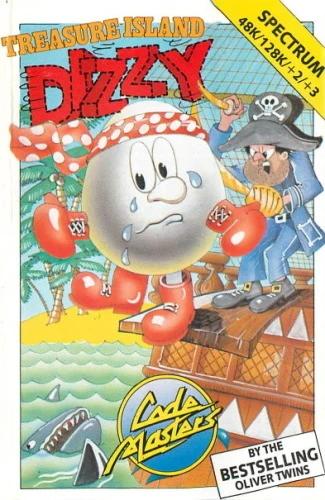
Image credits and source
Original cover / promotional artwork
Credit: Codemasters — artwork belongs to its respective rights holders
Source: The Oliver Twins archive
Game at a glance
- Status
- Classic
- Released
- 1988
- Platforms
- Amstrad CPC, ZX Spectrum, Commodore 64, Atari ST, Amiga, Nintendo Entertainment System, DOS
- Genres
- Adventure, Platform
- Developer
- The Oliver Twins (original development)
- Publisher
- Codemasters
Development and publication
Development: The Oliver Twins (original development). Publication: Codemasters.
The named development credit refers to the original or specifically identified version. Other ports and later re-releases may have different development teams.
Making the game
Whilst we were really pleased with the creativity of the original Dizzy game, it's sales were relatively slow. It did attract an enormous amount of fan mail at Codemasters offices, many of them asking for another Dizzy game. As time went by Dizzy sales didn't drop off as is common with most games and it kept on selling. So finally, over a year since the original Dizzy we thought it was time to produce a sequel.
This time Dizzy had to escape from being shipwrecked on a Treasure Island. We felt this evoked a great spirit of adventure and an obvious objective. It also meant we didn’t have to explain why he was on his own!
We introduced a better inventory system so Dizzy could now hold 3 items, even though it was all still on one button. Dizzy was given the ability to swim underwater, provided he kept the snorkel with him whilst doing so. We also introduced the classic treehouse ‘maze’, inspired by the Ewok village in Star Wars.
Development started in the last week of September and we were keen to ensure the game made it to the shops in time for the Christmas sales, so we set ourselves the hard deadline of mastering both Amstrad and Spectrum versions by the end of October. During final testing, we realised that if Dizzy dropped the Snorkel underwater, he would repeatedly die losing all his lives. We’d seen this sort of thing in other games and hated it. Anxious that we’d miss Christmas if we started re-designing systems, we took the stupid decision to simply remove the lives, so Dizzy had only 1 life! Whilst it was a decision we regretted, the game was released in mid-November and was a massive success both critically and commercially.
Codemasters quickly arranged for the game to be converted to all the other platforms and this set Dizzy on the road to stardom!
In ‘89 Codemasters spotted the opportunity of producing NES games, mainly for the massive American market. They had to reverse engineer the hardware and develop a system for programming games and Treasure Island Dizzy and was written by Andrew Graham, who had previously written the ST & Amiga versions as the test case. This and Micro Machines, also written by Andrew after finishing Dizzy, were Codemasters first NES games.
Original documents
Archived Treasure Island Dizzy document (PDF)